

Resource Room
Making Room for Conversation in a World of Screens
Oct
Dinner needs making. A work message needs answering. Your child is tired and so are you. A screen buys a few minutes to get something done.
For many families, this is an ordinary part of the day.
Advice about children’s screen use can leave parents feeling that every decision is being judged. As a speech and language therapist, I would like us to make that conversation more helpful.
Alongside asking how much time children spend on screens, we need to ask: where are the opportunities for conversation in their day?
Screen use and early language development remain an active topic of professional discussion. The Royal College of Speech and Language Therapists explored this in its winter 2026 Bulletin, describing excessive screen time as one of several factors that may affect early language development. That does not mean we can attribute an individual child’s language difficulties to screens.
What we can do is help families make space for the everyday interactions that support communication.
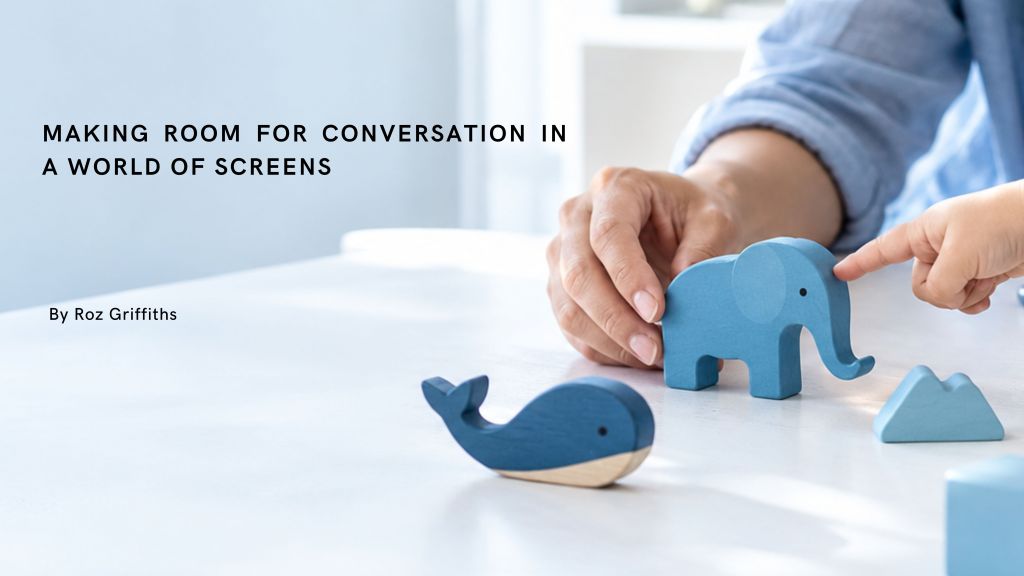
Think about a child pointing to a bird. An adult notices and responds: “There’s a bird!” The child makes a sound or points again. The adult waits, then adds: “He’s looking for breakfast.”
A small exchange, but the child has had an opportunity to initiate, receive a response and take another turn. Shared books, play and everyday routines offer many opportunities for this kind of interaction.
These moments do not need elaborate activities or a cupboard full of educational toys. They can happen while finding shoes, washing a muddy toy or watching rain run down a window.
Here are a few manageable ways to make room for them:
Choose one everyday routine. Start with a snack, getting dressed or a short walk. Put entertainment screens aside, including your own phone when possible and leave some space for interaction.
Follow what interests your child. If they are fascinated by a puddle, join them there. You could comment, “That was a big splash!” and wait to see what happens next.
Give conversation some breathing space. It is easy to fill every pause or ask question after question. Try making a comment, then waiting. A response might be a word, a gesture, a sound or a selection on a communication device.
Let shared viewing spark something afterwards. When you watch together, you might talk about a funny moment or recreate part of the story with toys. Keep it enjoyable, with no quiz required.
Screen use also serves different purposes. A device used for augmentative and alternative communication (AAC) provides access to communication. It should remain available; general advice to reduce entertainment screen time should not restrict someone’s voice.
Families need suggestions that fit their circumstances, including the needs of children with developmental differences. ASHA’s new 2026 screen-time resource explicitly recognises both child and caregiver needs when helping families find a workable balance.
Nobody can be constantly available and parents do not need to turn every moment into a language lesson.
Start with one small opportunity to notice, respond and enjoy something together.
Which everyday moment brings out the best conversations in your family?
