

Resource Room
When Online Habits Quietly Reshape Relationships
Dec
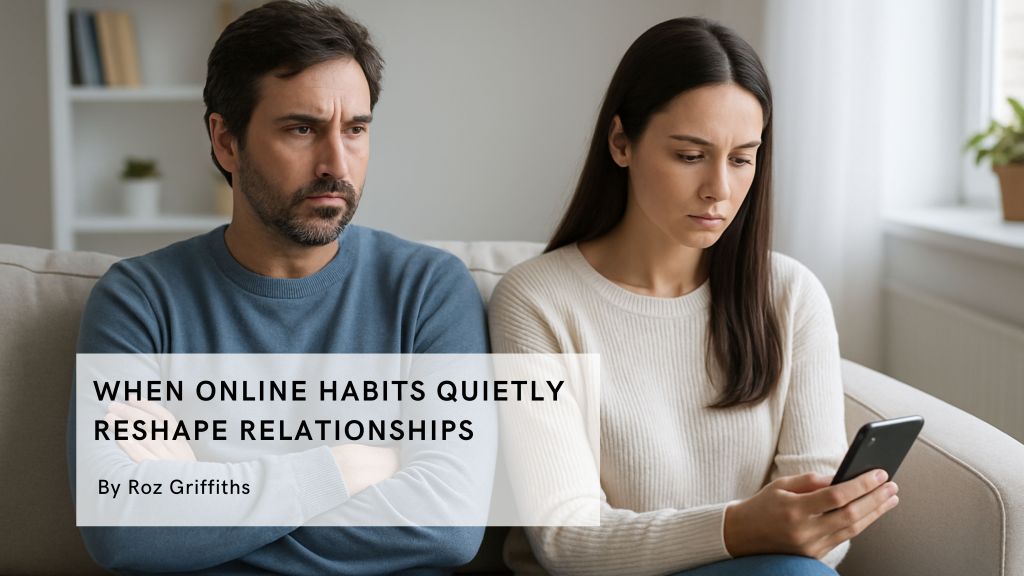
In modern relationships, technology gives us convenience, entertainment and escape – often all at once. But increasingly, therapists are seeing something else beneath the surface: private online habits slowly eroding connection, trust and emotional closeness between partners.
These habits are rarely discussed openly. In fact, many couples don’t identify them as a problem at all. They simply feel the impact: distance, tension, irritability or a growing sense that something intangible has shifted between them.
And yet, what many partners experience isn’t the “habit” itself – it’s the disconnect that grows around it.
The Hidden Cost of Coping Mechanisms
For many people, online habits become a way to cope with stress, overwhelm, boredom or unresolved emotions. It might start as a momentary escape, but over time, too much time online can shape:
- emotional availability
- communication patterns
- confidence and self-esteem
- the atmosphere in the home
- closeness and intimacy
When a partner feels shut out, unsure or confused by a sudden change in behaviour, it can create an emotional ripple effect throughout the entire household – even if nothing overt is happening.
This is particularly true in cultures or communities where sensitive topics aren’t easily discussed. Silence becomes the default. Resentment becomes normal. And distance becomes the unintended outcome.
It’s Not a Moral Issue – It’s an Emotional One
One of the biggest misconceptions is that online habits are a sign of weakness, irresponsibility or moral failure. In therapeutic work, the opposite is often true.
Most people who struggle with compulsive or secretive online behaviours are not trying to hurt anyone. They are usually trying to soothe something internal:
- unmet emotional needs
- stress they don’t know how to name
- anxiety or loneliness
- unresolved conflict
- a lack of tools for coping
But when the habit starts affecting mood, presence and connection with others, it becomes a relationship issue – not because of the content itself, but because of the emotional impact.
Why Partners Often Notice First
Women often sense shifts in emotional climate before any words are spoken. They feel the change in tone, attention and energy long before a partner realises a habit has become a coping mechanism rather than a choice.
They may not be able to pinpoint the cause, but they feel:
- the distance
- the distraction
- the drop in affection
- the irritability
- the secrecy
- the inconsistency
And they often carry the responsibility for “holding the relationship together” until the strain becomes too much.
Therapy Helps Not by Judging the Behaviour, but by Understanding It
At CHATTERBOX, our psychotherapist works with individuals and couples to explore what’s really happening beneath the habit – the emotional drivers, the relational patterns and the unspoken anxieties that keep people stuck.
Confidential support provides:
- space to talk openly without blame
- tools to manage stress and emotional triggers
- healthier coping strategies
- communication skills that reduce conflict
- opportunities to rebuild trust and closeness
Many partners are relieved to discover the issue is not a personal flaw or a failing relationship – it’s an emotional pattern that can be understood, supported and changed.
A Healthier Path Forward
Online habits don’t have to define a relationship. With the right support, couples can move from confusion and distance to understanding and greater emotional security.
It starts with one honest conversation – and sometimes that conversation happens first in a therapist’s office, where both partners can speak safely and be heard clearly.
A Question to Reflect On
What small changes in emotional presence, communication or behaviour have you noticed – in yourself or a partner – that might be signalling an unmet need beneath the surface?
