

Resource Room
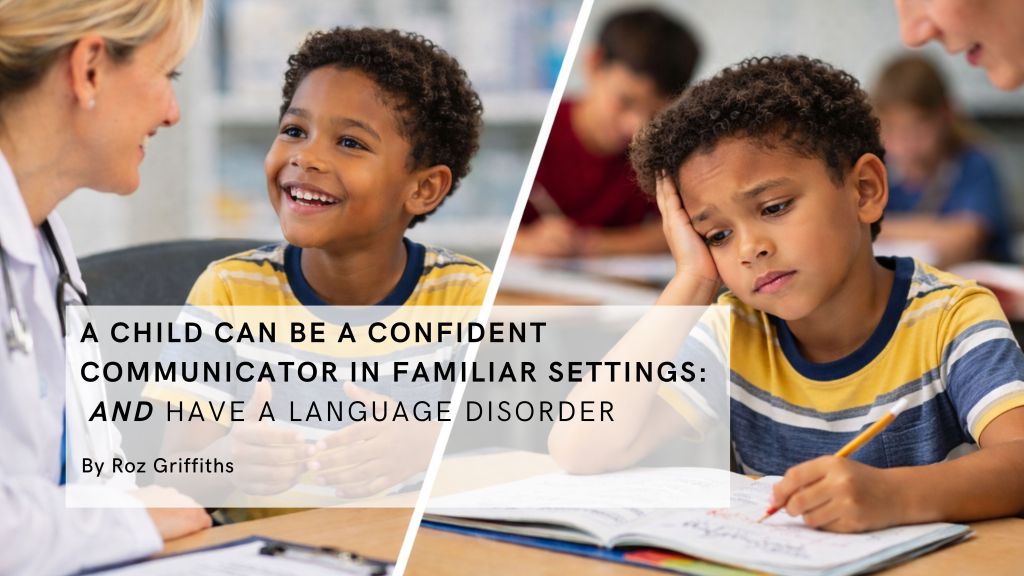
A child can be a confident communicator in familiar settings AND have a language disorder
Feb
A child can look “fine” in a brief consult and still have significant language difficulties. They may chat confidently and answer simple questions, but a short interaction rarely samples the language skills school demands.
What to watch for in preschool and primary, especially when the child seems “fine” in clinic
One of the most common reasons children are referred late for Speech and Language Therapy is that they can be confident communicators in familiar settings. They present well in structured adult-led conversations, happily chat about preferred topics and often appear comfortable with unfamiliar adults. In a short appointment it’s easy to conclude, “Their language is fine.”
But Developmental Language Disorder (DLD) and other significant language difficulties can still be present and many children compensate extremely well until the language demands of preschool or school expose the gaps.
This is easy to miss in a consult because children often do well when the topic is familiar, questions are concrete, there’s time to think and they can lean on well-practised social scripts. Difficulties tend to show up when language becomes fast, abstract, multi-step or open-ended, which is exactly what early years settings and classrooms require.
Preschool: what parents say that’s worth listening for
In preschoolers, the concern often sounds like: “They talk a lot, but it’s hard to follow what they mean,” or “They don’t follow instructions unless I show them.” Parents may describe frustration, big reactions when routines change or a child who struggles to find words under pressure. These children can have plenty of vocabulary yet still find understanding, sentence structure and organising thoughts surprisingly hard work.
Primary: what teachers and parents often report
In primary-aged children, the red flags often shift towards language for learning: “They know it but can’t explain it,” “They misunderstand instructions,” “Their stories are muddled,” or “Their writing doesn’t match their ideas.” The gap often becomes clearer when the curriculum moves from learning to read → reading to learn and tasks demand narrative structure, inference, explanation and organised written language.
A quick, high-yield question that changes everything
Instead of “Do you have any concerns?”, try asking:
“Does communication or literacy development feel effortful for them at home or at school?”
If the answer includes daily effort, frequent misunderstandings or emotional fallout after school, it’s often a meaningful clue.
Why early referral matters, even when they’re coping
Because coping has a cost. Children working overtime to process language often pay in confidence, participation, behaviour or anxiety. Those who present well in familiar settings can mask for longer, but when demands rise, the struggle can suddenly look like attention difficulties, motivation problems or “they’ve become emotional”. Sometimes it’s not new behaviour, but an old difficulty that’s finally run out of room to hide.
What helps an SLT determine the most appropriate assessment pathway from your referral
If you include just three things, make it these: the specific concern (understanding, expression, narrative, comprehension, intelligibility), where it shows up most (home vs school, 1:1 vs group, instructions vs storytelling vs writing) and whether any other languages are used at home (if relevant). That’s usually enough for us to prioritise and plan the right assessment pathway.
If you’re unsure, refer early – an SLT assessment can clarify whether support is needed and advise practical adjustments and accommodations.
