

Resource Room
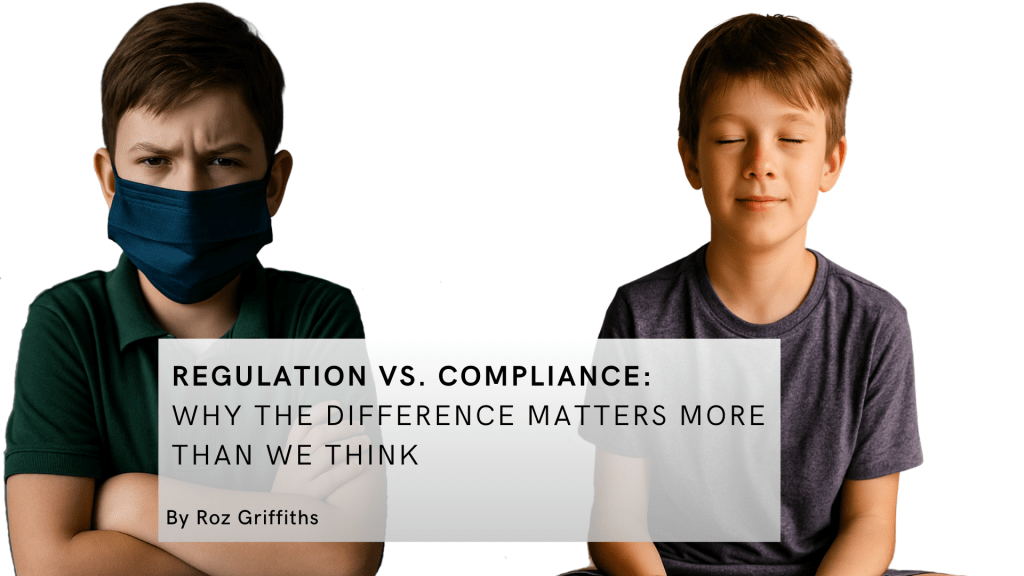
Regulation vs. Compliance: Why the Difference Matters More Than We Think
Aug
As a speech and language therapist working closely within a multidisciplinary team that includes occupational therapists and psychotherapists, I often find myself revisiting a deceptively simple question:
Are we supporting a child to become regulated – or simply compliant?
At first glance, those words may seem interchangeable. But over the years, I’ve learned that the distinction is not only clinically significant – it’s essential for long-term wellbeing.
What Compliance Can Look Like
I once worked with a young child who was praised for being “so well-behaved” during sessions. She followed every instruction, nodded at the right times and rarely expressed frustration. On paper, it looked like progress.
But behind that behaviour was a child holding their breath – figuratively and literally. The moment she left the room, emotional outbursts returned. Her nervous system was still dysregulated, even if her outward behaviour looked “in control.”
This is compliance. It’s a surface-level response that can come from fear, pressure or people-pleasing – not true internal regulation.
What Regulation Really Feels Like
In contrast, another child I supported struggled to sit still, often needed movement breaks and occasionally walked out of sessions altogether. To some, this looked like non -compliance.
But through collaboration with an occupational therapist and a psychotherapist on our team, we were able to identify sensory and emotional needs that had gone unmet. With time, the child developed tools to self-regulate: pausing to squeeze a fidget, requesting space or using visuals to express a boundary.
Over time, these “non-compliant” behaviours gave way to something deeper – trust, safety and genuine engagement.
The Long-Term Risk of Prioritising Compliance
It’s easy – especially in systems under pressure – to value quick wins. Compliance often brings order, predictability and adult satisfaction. But when compliance is prioritised over connection and co-regulation, the long-term cost can include:
- Masking of distress or neurodivergence
- Burnout in children and caregivers
- Missed opportunities for emotional literacy and autonomy
And importantly, we risk teaching children that their internal experience is less important than external expectations.
Collaboration Makes the Difference
One of the greatest gifts of working in a multidisciplinary setting is the shared understanding that behaviour is communication. Together, we explore not just what a child is doing – but why.
The occupational therapist might help us decode sensory triggers. The psychotherapist might illuminate patterns of emotional withdrawal. And I bring a language and communication lens to help children express those needs more clearly.
Regulation, we’ve found, is best cultivated through consistency, trust and time. There’s no shortcut – but the results are lasting.
A Reflection for Fellow Practitioners & Educators
The next time a child seems to be “holding it together” a little too well, I encourage you to pause and ask:
Are they truly regulated or are they complying to survive?
Let’s shift our lens – from control to connection, from performance to presence.
I’d love to hear from others in this space: What helps you differentiate between regulation and compliance in your own practice?
✅ #TherapistVoices #ChildDevelopment #TraumaInformedPractice #Neurodiversity #SLTinsights
